
VOL. I · OCT. 17, 2026 ● NO. 07 ● SEX WORK, SPEECH & THE BODY
The White Rose
“We will not be silent.”
Wir schweigen nicht — after Sophie Scholl
The desk for sex-worker rights and adult-content law — age-verification mandates, platform bans, FOSTA-SESTA, and the fight over who may speak about sex.
Age Verification
Supreme Court Upholds Texas Age-Verification Mandate for Adult Sites
In Free Speech Coalition v. Paxton, a 6-3 Court applied intermediate scrutiny to uphold H.B. 1181, reshaping the constitutional ground under every state age-gate.
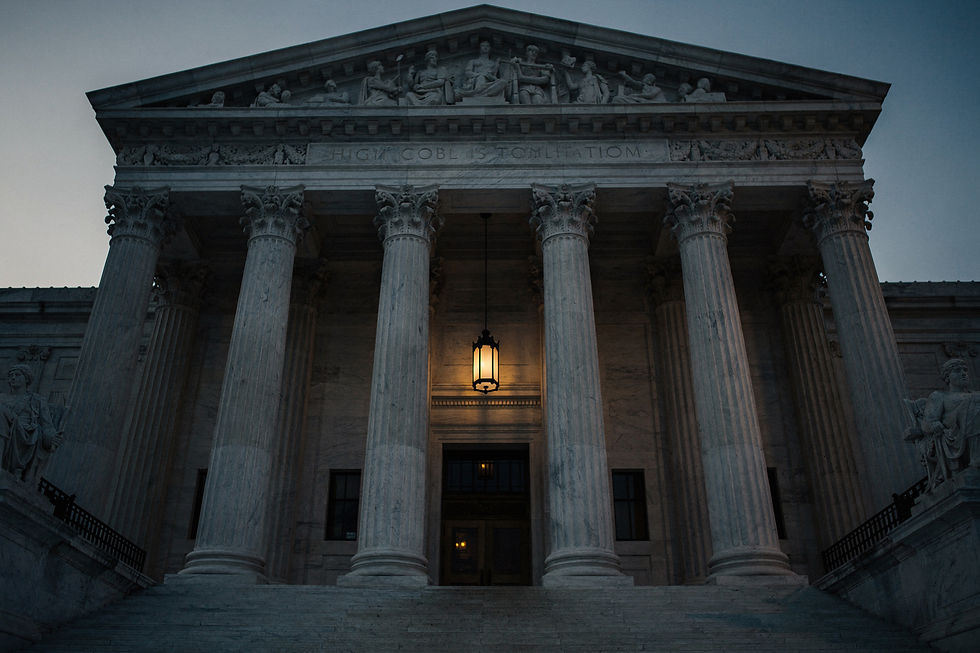
The U.S. Supreme Court building in Washington, D.C., where the age-verification case was decided in June 2025. — AI-generated illustration
The U.S. Supreme Court on June 27, 2025 upheld Texas's requirement that commercial websites hosting sexual material verify that visitors are adults, ruling 6-3 that the mandate only incidentally burdens adults' protected speech and therefore survives intermediate rather than strict scrutiny. The decision hands states a durable template for regulating adult content online and immediately reshaped litigation over more than two dozen similar statutes.
Texas House Bill 1181 requires any site on which at least one-third of the content is sexual material harmful to minors to confirm a visitor's age through government ID or transactional data. The Free Speech Coalition, a trade association for the adult industry, argued the law forces adults to surrender identifying information as the price of accessing constitutionally protected expression, and that strict scrutiny should apply.
Writing for the majority, Justice Clarence Thomas concluded that requiring age verification is, in his words, an "ordinary and appropriate means" of enforcing an age limit states may lawfully impose. The Court reasoned that because minors have no right to access this material, and the burden on adults is only the incidental step of proving their age, intermediate scrutiny governs. Under that standard, the majority found Texas's interest in shielding children sufficient and the burden not substantially greater than necessary.
Justice Elena Kagan, joined by Justices Sonia Sotomayor and Ketanji Brown Jackson, dissented, warning that the majority departed from precedent that had subjected content-based restrictions on adult access to strict scrutiny, and that the privacy costs of routine online identity checks were understated.
The ruling did not bless every age-verification scheme; it turned on the specific structure of H.B. 1181. But by lowering the level of scrutiny, it removed the doctrinal obstacle that had blocked such laws for two decades and set the stage for a wave of enforcement and copycat legislation across the country.
6-3
Decision
1/3
Content threshold triggering H.B. 1181
20+
States with similar laws affected
an ordinary and appropriate means
— Justice Clarence Thomas, majority opinion
Video caption
How the case moved
2023-06
Texas enacts H.B. 1181 requiring age verification for adult sites
2024-03
Fifth Circuit allows the law to take effect, applying rational-basis review
2025-01
Supreme Court hears oral argument
2025-06-27
Court upholds the law 6-3 under intermediate scrutiny
✓ Fact check
Claim
“The Supreme Court applied strict scrutiny and still upheld the Texas age-verification law.”
Reality
The majority applied intermediate scrutiny, not strict scrutiny; the choice of standard was the central dispute between the majority and the dissent.
§
Legal References
Bluebook citation · cases, statutes & the record
Primary legal authority cited in this report. Links go to the public record where one exists.
[1]
Free Speech Coalition, Inc. v. Paxton, 606 U.S. ___ (2025), No. 23-1122 ¶ source
U.S. Supreme Court 2025
¶
Academic References
ABA / law-review style · secondary scholarship
Secondary scholarship that informs the analysis.
[1]
Reference text
Author bio
Source: SCOTUSblog
More from The White Rose

Kicker
Related headline
NurFüsse · 10TOESDown
The Law & Liberty Desk — three mastheads, one dispatch.
The North Star · The White Rose · Milk — nurfusse.com